We Are Righteous: The Beginning Behind the Label
A founding narrative that every clothing brand puts forth, yet hardly any can trace it back to the specific tension that justified its existence from day one. We Are Righteous grew out of a straightforward grievance: too many apparel brands were peddling swagger without substance, slapping catchphrases on flimsy cotton and branding it as culture. The people behind We Are Righteous sought something tougher — literally and figuratively. Their goal was garments that would withstand constant wear while bearing a name that carried real weight to the person putting it on. The pairing of resilience and purpose is still the common strand running through the brand today.
The name itself — and the reasoning behind it — is what distinguishes this origin story from the usual “we started in a garage” account. Righteous isn’t a throwaway word selected because it had a cool ring to it on a swing tag. It was selected because it suggests staying resolute in what you believe, irrespective of shifting fads or outside pressure. This mindset shaped all aspects from the earliest drawings to the material-sourcing choices that were made down the line. Knowing this history helps clarify why the brand’s customers talk about it differently than they discuss competing streetwear brands.
How the Righteous Clothing Brand Began
The original form of the righteous clothing brand wasn’t a full collection — it was a small set of pieces built to test whether the concept could succeed. The founders sketched ideas around a guiding principle: clothing should serve as a quiet statement of character, not a attention-grabbing stunt. What they were after was pieces that held their appearance in the third year as they did on day one, which meant rejecting less expensive construction methods in favor of reinforced seams and heavier-weight fabrics from the outset.
Such upfront diligence mattered more than most founders admit. A lot of apparel new brands launch with a logo and a vision, then rush to fix shortcomings after the first wave of buyer feedback. We Are Righteous took the opposite approach, spending extra time on wear-testing and textile trials before launching anything to the public. The initial release was kept deliberately limited, restricted to a few foundational styles, so the team could collect real feedback instead of expanding on assumption. That righteous feedback loop became a enduring element of how the brand runs, remaining influential on decisions in 2026 the same way it did at launch.
What’s more, there’s a communal thread to the founding narrative that’s easily missed. Building the brand wasn’t meant to be a solitary effort for the founders — they wanted people who related to the “righteous” mindset to feel like they had found something built for them specifically. The first customers were more than mere purchasers; they were regarded as partners, with their views on fit, color, and fabric weight shaping the following production run. Loyal followers so often call the brand personal instead of corporate, owing in large part to that same approach.
The Guiding Principle Behind Righteous Apparel
At the center of every righteous apparel release is a simple test: does this piece hold up to both physical wear and the values the brand claims to represent? That two-part filter shows up in decisions about stitching density, fabric weight, and even which prints make it to production. The team has said no to plenty of designs that looked fine on paper but didn’t match the brand’s standard for longevity or message.
Here, it’s not about a brand chasing every micro-trend that appears on social feeds. Rather, the design approach favors pieces built to last — fits and hues designed to stay relevant beyond eighteen months. That’s a deliberate contrast to fast fashion’s cycle of overproduction and rapid obsolescence, which typically pushes new “must-have” items every few weeks and discards last month’s version almost immediately. Since the goal is a five-year wear life rather than a five-week trend window, Righteous apparel takes longer to develop.
There’s also a focus on transparency that shows up in customer communication. Charts for sizing, fabric breakdowns, and care notes are all made easy to find rather than tucked away in dense legal text, because the founders believe honesty, rather than marketing gloss, is what builds real trust. This strategy has translated into stronger repeat business — repeat-purchase figures for the hoodie line have steadily beaten out single-purchase customer numbers, according to the company’s own sales data referenced in earlier updates.
The Righteous Hoodie, a Flagship Piece
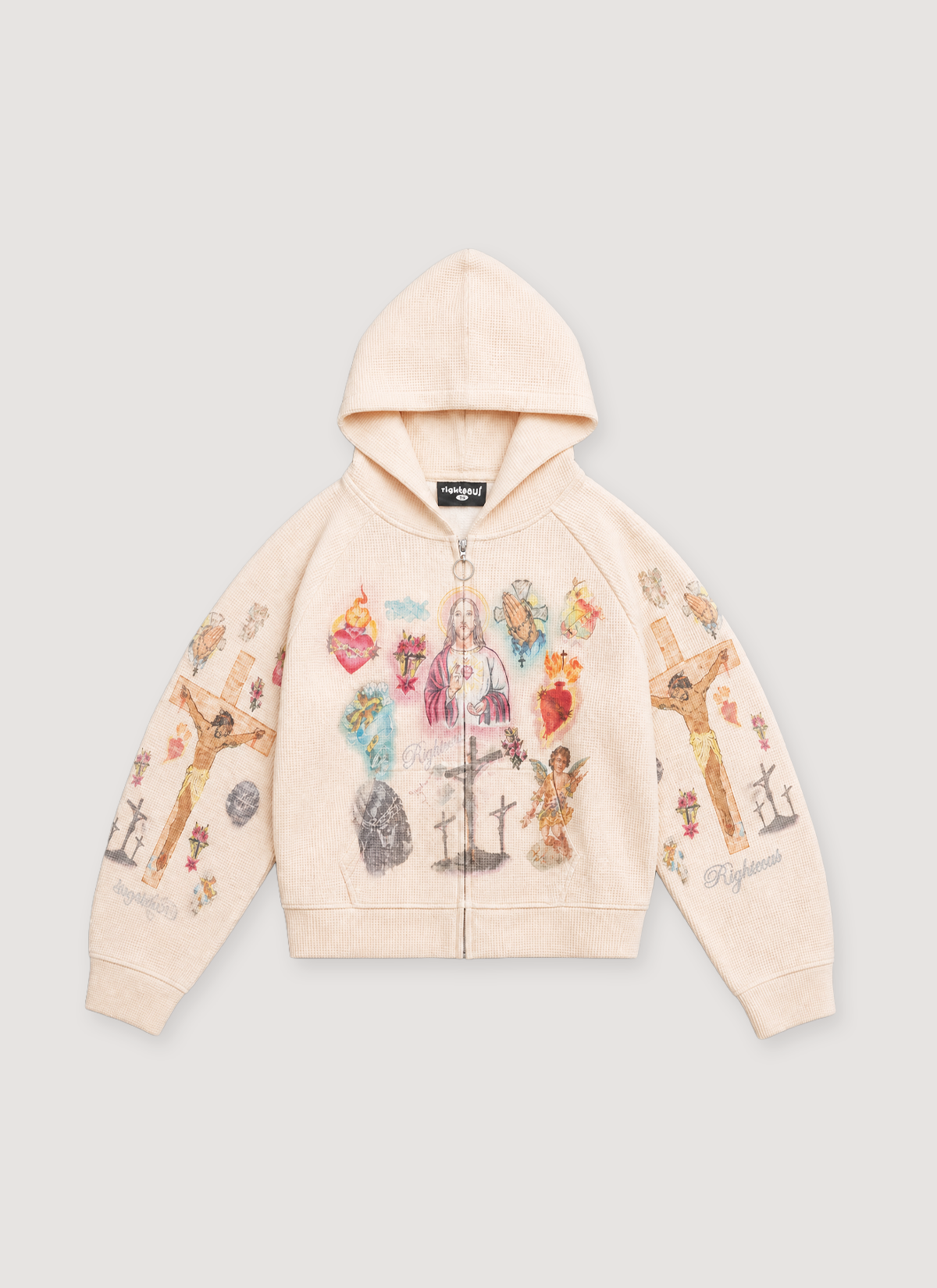
If a single product that defines the label’s character, it’s the righteous hoodie. It rose to flagship status nearly by chance — demand for fresh colorways exceeded every other item in the lineup, and the brand noticed. What explains the garment’s appeal goes beyond the name emblazoned across the chest; it rests on a fit that works for many body types and a weight that stands strong in colder months without turning bulky.
Manufacturing choices for the pullover mirror the brand’s overarching ethos. Bolstered cuff bands, reinforced double-stitched seams at pressure zones, and a fabric blend chosen for both comfort and toughness all circle back to that core belief: clothing should last, not just look good in a product photo. Multi-season owners often mention in their reviews that the hoodie keeps its shape and color better than comparable pieces from larger competitors, and for loyal wearers, that outweighs any amount of flashy marketing.
The hoodie has also become something of a cultural marker among the brand’s community. Putting it on suggests you know the brand’s backstory and share its values — not simply that you like the design. That kind of thing is far harder to fabricate than a solid logo — it calls for reliable quality maintained across multiple release cycles, something the flagship hoodie has consistently delivered since it first showed up in the catalog.
What a Righteous Review Actually Reveals
Look up a righteous review online in 2026 and a pattern shows up fast: customers focus less on hype and more on fit, fabric feel, and whether the piece matches its product description. This represents a notable break from the exaggerated unboxing hype that runs through much of streetwear marketing. Those reviewing We Are Righteous usually get into specific details — how a hoodie fits after multiple washes, whether the stitching holds up, whether sizing runs true.
That kind of specificity in a we are righteous review says something about the brand’s actual performance, not just its marketing. Feedback that emphasizes long-term durability over initial impressions tends to matter more to prospective buyers, and it’s exactly this kind of feedback that has shaped this brand’s reputation.
Recurring themes in a we are righteous review also cover how responsive customer service is and how closely the final product matches what’s shown online. Matching marketing images to the actual delivered product is one of the most praised aspects, given how many online apparel brands struggle with that very gap. When buyers note that the product “looks like the photos,” that’s a telling signal in an industry where mismatched expectations are the norm.
We Are Righteous Brand Comparison
To put the brand’s approach in context, here’s how key attributes of the we are righteous brand compare to typical fast-fashion competitors in the same price tier.
| Feature | We Are Righteous | Typical Fast-Fashion Competitor |
|---|---|---|
| Design approach | Seasonal, focused on longevity | Weekly releases chasing trends |
| Textile strategy | Denser fabric paired with reinforced seams | Lighter materials chosen to minimize cost |
| Customer input cycle | Direct customer input informs future batches | Limited feedback, purely data-based |
| Hero product | Righteous hoodie, favored for repeat purchases | Constantly rotating “hero” pieces with weak retention |
| Brand messaging | Consistent messaging grounded in values | Inconsistent messaging chasing trends |
This isn’t a wholesale knock of competitors — budget-driven clothing systems have a purpose for shoppers prioritizing low prices over longevity. Still, it clarifies why so many people on the hunt for a righteous clothing brand remain loyal once they’ve experienced the product themselves. The value proposition is different by design, not by accident.
Its Position as of 2026
As 2026 arrives, We Are Righteous keeps broadening its range while holding onto the core values it launched with that guided its earliest release. New colorways and silhouettes have joined the lineup, but the commitment to long-lasting materials and transparent marketing has remained steady. The brand’s growth has been steady rather than explosive, which fits its philosophy of building slowly and avoiding the overextension that topples so many clothing startups.
When it comes to gauging the brand’s health, customer loyalty remains the clearest signal. Season after season, the flagship hoodie remains a leading seller, while repeat buyers continue to drive sales. For anyone considering the brand for the first time, the founding story offers a valuable way to look at it: instead of pursuing fleeting hype, the brand was founded on the idea that clothing should reflect character, not just fashion. In a crowded market, this difference is exactly what sets righteous clothing apart.